
Introduction
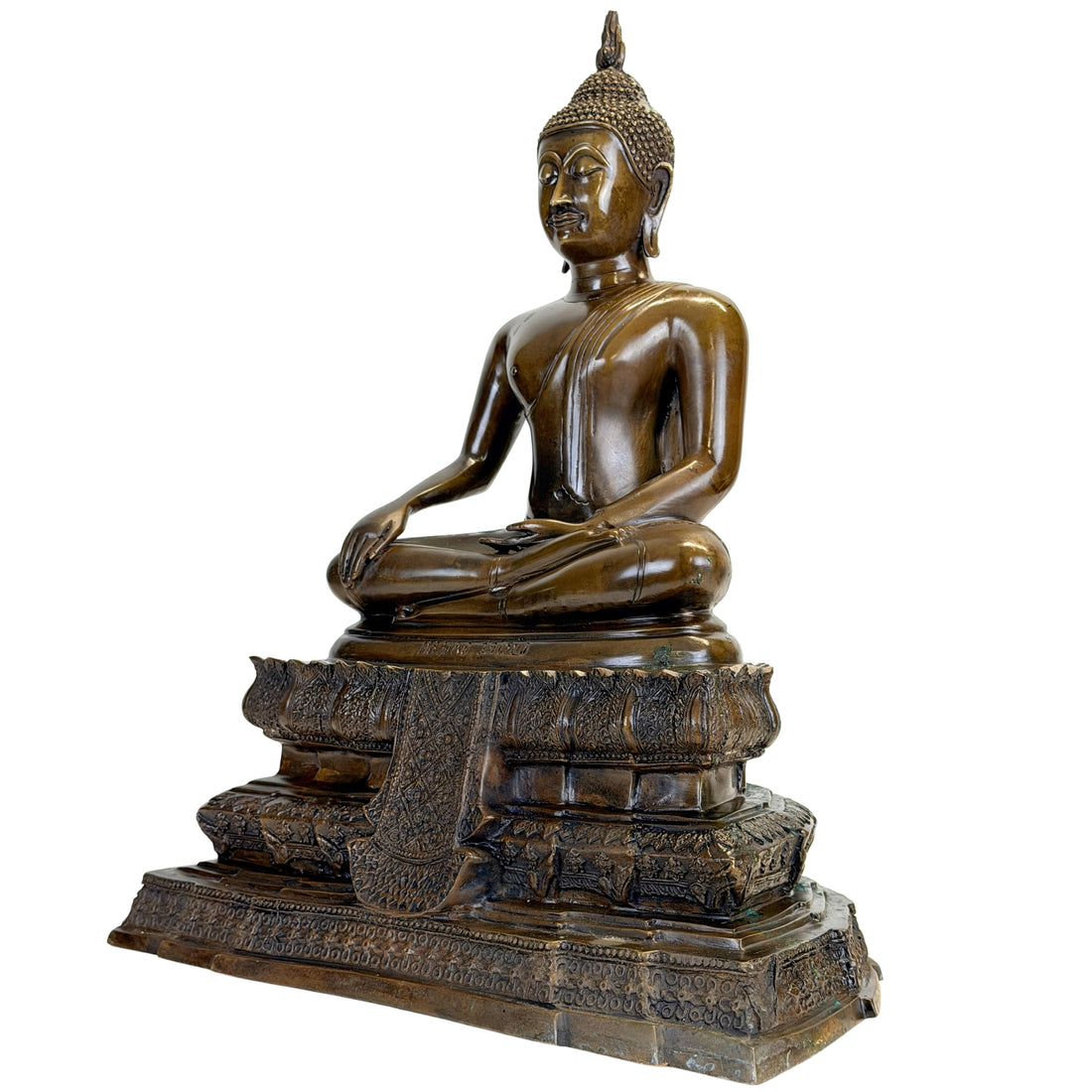
Buddhism ranks among the world's most influential religions, with over half a billion adherents, predominantly spread across East Asian countries such as Nepal, India, China, Japan, Myanmar, Indonesia, and Korea. Within this rich spiritual tradition, Buddha statues hold a central place. These figures represent not only Buddha himself but also symbolize the deeper inner feelings and spiritual values of each believer. The creation of bronze Buddha statues is an art form that has been passed down from generation to generation for centuries, with each country and region developing its own unique style and crafting heritage. From Myanmar to Tibet, from China to Korea: wherever Buddhism has taken root, distinctive stylistic interpretations have emerged.
Nepal occupies a particularly special position in this regard. This country is considered the cradle of Buddhism and has harbored the most refined masterpieces of bronze casting in Nepal for centuries. In this article, we discover how these magnificent art objects come into being and what makes them so extraordinary.
Nepal: The Heart of the Buddha Statue Tradition
Patan: The Epicenter of Master Artisans
Nepal is renowned worldwide as the center for producing authentic Buddha statues. Although Lumbini – the birthplace of Buddha – attracts thousands of Buddhist pilgrims annually and is considered one of the four holiest pilgrimage sites, it is the city of Patan that has established itself as the powerhouse of artistic production.
In Patan, a concentration of master craftspeople converge, having dedicated themselves for generations to the creation of bronze Buddha statues from Nepal. This city is not merely a place where statues are made – it is a living heritage center where tradition, craftsmanship, and spirituality converge.
The Newar Tradition: Guardians of an Art Form
The Newar people of Nepal are recognized as the primary custodians of this ancient artistic tradition. According to historical records, it was already in the time of Bhrikuti – a Chinese princess devoted to Buddhism – that Nepali artisans created sacred Buddha statues.
One such dedicated master craftsman, Rakesh Manandhar from Patan, expressed this heritage eloquently: "We have not forgotten our culture and we still follow this tradition to create sacred and beautiful Buddha statues."
These words reflect an unbroken line of excellence that spans more than a thousand years. Each generation inherits not only techniques but also a deeper understanding of the spiritual significance of what they create.
The Bronze Casting Process: Craftsmanship in Perfection
Why Is Bronze Casting So Complex?
Creating authentic bronze Buddha statues using traditional methods is a complex procedure that leaves no room for error. Yet it is precisely this complexity that makes these artworks so valuable and beautiful.
Each individual statue requires the collaboration of multiple specialized craftspeople. It is an intensive process demanding constant attention, precision, and profound knowledge. Therefore, producing an authentic, high-quality statue takes months of dedicated work.
Step 1: The Wax Model – The Artistic Foundation
The first phase begins with an experienced craftsman fashioning a detailed sculpture from wax. The artist determines at this stage all the essential forms and proportions of the statue. This may include standard Buddha mudras and poses (the characteristic hand gestures and body positions), but also other sacred figures such as Manjushree, Avalokitesvara, or Hindu deities.
What distinguishes a masterpiece from standard work:
- Precision in every line and curve
- Accurate proportions according to traditional guidelines
- Expressive facial features
- Detailed decorative elements
- Perfect symmetry where required
A recognized artist may spend weeks on a single wax model to ensure all nuances are correctly executed.
Step 2: Mold-Making and Refractory Treatment
Once the wax model is completed, a mold is created around it. This is typically done using specially selected ceramic materials. This mold must be extremely precise, as any irregularity would manifest itself later in the finished bronze product.
Subsequently, the mold is heated to high temperatures. This process serves two purposes: first, all wax is removed from the mold (hence the name "lost-wax casting"), and second, the ceramic materials are hardened to withstand the casting process.
After heating, the mold is left in the sun to cool and cure slowly. This drying process takes at least 15 days, depending on the season and temperature conditions.
Step 3: The Actual Bronze Casting – The Critical Phase
Bronze casting in Nepal reaches its highest level in Patan, where this technique has been perfected over centuries. Depending on the desired composition of the statue (pure bronze, copper alloy, or other mixtures), the metal is heated in special furnaces to very high temperatures until it becomes completely liquid.
The molten metal is carefully poured into the cavity of the mold. This is a moment requiring utmost care – pouring too quickly can create air bubbles; pouring too slowly can cause the metal to solidify prematurely. The casting process is repeated, layer by layer, until the required thickness is achieved.
This is done for each individual component of the statue: torso, arms, legs, head, and all decorative elements.
Step 4: Demolding and Assembly
When the molten metal has cooled and solidified, the burned ceramic mold is carefully removed from the bronze object using hammers. This is the first moment when the craftspeople get a true impression of their work – the moment when the conceptual artwork becomes reality.
After complete mold removal, all individual cast pieces are joined together by experienced welders. These welders must ensure that the connections are as seamless and invisible as possible.
Step 5: Finishing and Detailing
Now begins the phase of perfection. The craftspeople grind, polish, and engrave the statue down to the finest detail. Special attention is given to the characteristic Buddha mudras and poses, the hand gestures and body positions that carry specific spiritual significance.
Many Buddha statues receive a gilded surface, giving them a warm golden glow that shines beautifully in the light. This gilding is done using traditional techniques and makes the statue particularly dignified and spiritually powerful.
The facial features, the eyes, the mouth – every aspect is refined to millimeter-perfect specifications. Symbols specific to particular Buddha manifestations are applied separately.
Why Choose Authentic Bronze Buddha Statues?
The Buddha statues crafted by Newar artisans in Patan distinguish themselves through their incomparable beauty and unique character. This stems from:
- Thousand-year-old techniques: No modern shortcuts, but pure craftsmanship
- Spiritual depth: Artists understand the profundity of what they create
- Perfect proportions: Every detail follows sacred traditional ratios
- Premium materials: Only the finest quality bronze and copper alloys
- Handcrafted work: No mass production, each statue is unique
1stBuddha: Your Partner for Authentic Buddha Statues
For those truly interested in owning authentic, traditionally-crafted bronze Buddha statues from Nepal, it is crucial to choose a trustworthy partner. 1stBuddha has specialized in sourcing the finest artworks directly from master craftspeople in Patan.
By partnering with 1stBuddha, you guarantee yourself:
- Direct relationships with recognized Patan artists
- Complete authenticity and provenance documentation
- Consultation on style, size, and placement
- Support with shipping and installation
- An investment in art historical value
Nepal's Enduring Heritage
Despite globalization and modern production techniques, Nepali craftspeople remain faithful to their tradition. Creating Buddha statues using traditional methods is not nostalgia – it is a conscious choice to prioritize quality over speed and spiritual value over commercial profit.

This heritage has established Nepal worldwide as the epicenter of authentic Buddhist artistry. Every bronze Buddha statue that travels from Patan to the world carries with it a fragment of this rich culture.
Conclusion
The casting of bronze Buddha statues in Nepal is far more than artisans at work – it is the manifestation of a spiritual tradition more than a thousand years old. From the first wax model to the final polish, every stage reflects a profound respect for Dharma and an unwavering commitment to perfection.
Whether you are a devoted Buddhist, an art collector, or simply someone who appreciates beauty – an authentic bronze Buddha statue from Nepal brings more than just aesthetics: it brings history, spirituality, and world-class craftsmanship into your space.
Contact Us
Are you interested in discovering authentic bronze Buddha statues of world-class quality? Contact us today for personal consultation, galleries of available works, or information about custom commissions. Our team is ready to help you find the perfect artwork for your collection or space. Reach out to us today for more information.


