
For millions of people, the Buddha is the most recognisable symbol of calm, insight and compassion. Buddha statues are modelled on Siddhartha Gautama, the founder of Buddhism, and can be found across almost the entire world — especially in countries where the tradition runs deep. From the centuries-old Buddha statues in Sri Lanka, carved from solid granite, to colossal bronze giants in Japan and China, the variety in style, material and scale is remarkable.
Some figures fit on a windowsill; others tower dozens of metres above the landscape. In this guide from 1stBuddha, we take you to ten of the most beautiful and imposing Buddhas in the world. Whether you are a traveller, an admirer of art or a practitioner, these places deserve a spot on your bucket list.
Why Buddha Statues Captivate People Worldwide
A Buddha statue is more than a work of art. It is a reminder of the Buddha's teaching and, at the same time, a place of devotion and reflection. That is precisely why communities sometimes invest decades of labour and millions in funding into a single figure.
The Meaning Behind Every Buddha Image
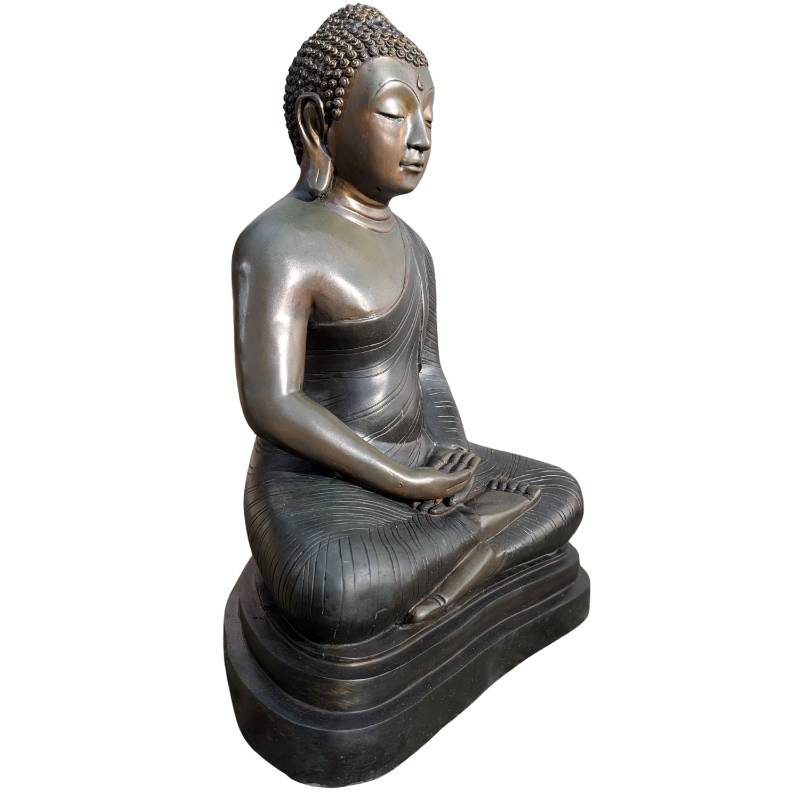
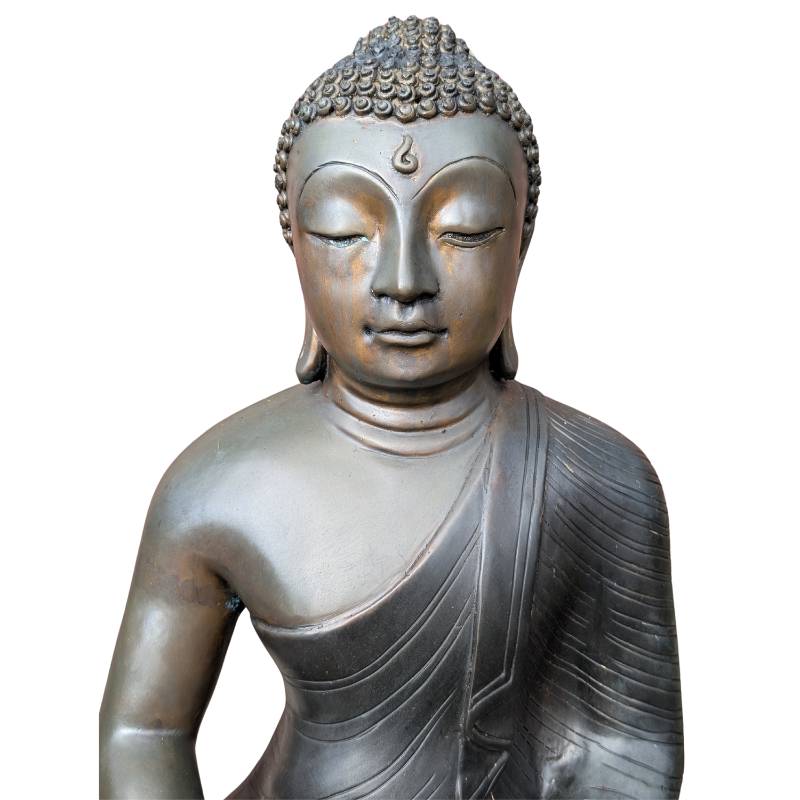
The posture of the figure tells its own story. Once you know what to look for, a Buddha image reads like a short summary of a life:
- Seated: usually in meditation or at the moment of enlightenment.
- Standing: linked to teaching, blessing and passing on the doctrine.
- Reclining: the Buddha at the moment of his death, as he enters nirvana.
Material, Scale and Craftsmanship
The largest statues are feats of engineering. Think of bronze cast in hundreds of separate sections, reinforced concrete clad in marble, or a rock face worked by hand centuries ago. That craftsmanship often makes a visit just as striking as the religious significance.
The Most Beautiful Buddhas in the World: Our Top 10
1. Avukana Buddha – Sri Lanka
In North Central Sri Lanka stands the roughly 12-metre (40-foot) Avukana Buddha, carved from a vast granite outcrop sometime in the 5th century. Its refined sculptural detail makes it one of the most remarkable standing Buddha statues in Sri Lanka and a much-loved destination for visitors.
Archaeologists believe the figure was once sheltered by a shrine, of which only fragments of wall remain. Historians long pointed to its resemblance to the nearby statue at Sasseruwa and assumed both were made at the same time by a master sculptor and his pupil. That theory has since been disproved, though the legend is still happily retold.
Image credit: Carlos Delgado, CC BY-SA 4.0, via Wikimedia Commons
2. Wat Benchamabophit – Thailand
Wat Benchamabophit Dusitvanaram in Bangkok is best known as the Marble Temple. Construction of this elegant building in Italian marble began in 1899 under King Chulalongkorn and was not completed until 1911.
Beyond the architecture, there is another reason to visit: the temple houses no fewer than 52 different Buddha statues. Visitors looking specifically for them will find them near the assembly hall.
3. Spring Temple Buddha – China
At more than 153 metres (502 feet), the Spring Temple Buddha in Lushan County, Henan province, is a breathtaking sight. Built between 1997 and 2008, it currently ranks as the second-tallest statue in the world.
The giant stands atop a Buddhist monastery and was cast from 1,100 pieces of copper with a combined weight of around 1,000 tons. The total construction cost is estimated at nearly $55 million.
Image credit: Nyx Ning, CC BY-SA 3.0, via Wikimedia Commons
4. The Great Buddha of Thailand
This seated figure of roughly 92 metres (302 feet) currently ranks seventh in the world by height. It is built of concrete and fully gilded.
Construction was completed in 2008 in commemoration of King Bhumibol of Thailand, with the faithful helping to raise the funds. Thanks to its scale and position, the statue is visible from far across the surrounding area.
Image credit: Stephanie Richard, CC BY-SA 2.0, via Wikimedia Commons
5. Nanzo-in Reclining Buddha – Japan
This reclining Buddha is reported to be the largest bronze statue in the world and weighs almost 300 tons. It depicts the Buddha at the moment of his death, as he prepares to enter nirvana — one of the most serene subjects in Buddhist sculpture.
6. Phuket Big Buddha – Thailand
The seated Buddha of Phuket was built between 2002 and 2014 from concrete clad in Burmese white marble. Standing around 45 metres (145 feet) tall, it is visible from much of the island.
In 2008 the Supreme Patriarch of Thailand granted it the honorary title "The Buddhist Treasure of Phuket". Its official name is Phra Phutta Ming Mongkol Akenakakiri, which translates loosely as "the glorious, venerable Buddha atop the hill of Naga".
7. Ushiku Daibutsu – Japan
In Ushiku, Ibaraki Prefecture, stands a bronze Buddha of roughly 120 metres (390 feet) — one of the five tallest statues in the world. It was erected to commemorate the birth of Shinran, founder of Jodo Shinshu, the True Pure Land school of Buddhism.
What makes this statue exceptional is its interior. Ushiku Daibutsu doubles as a four-storey museum, each floor devoted to a different theme:
- A lift carries visitors to an observation deck at about 85 metres (279 feet).
- From there you look out over a flower garden and a small zoo.
- The third floor alone displays more than 3,000 Buddha statues.
8. Tian Tan Buddha – Hong Kong
This bronze Buddha of around 34 metres (112 feet) was completed in 1993 and sits on top of a hill. Reaching its base means climbing 268 steps.
Beneath the figure are three floors of halls, one of which is said to hold an ancient relic containing cremated remains of Gautama Buddha. One striking detail: while most Buddhas face south, the Tian Tan Buddha looks north.
9. Buddha Dordenma – Bhutan
High in the mountains of Bhutan, this bronze Buddha of roughly 54 metres (177 feet) gazes out over the landscape. It was erected to mark the 60th birthday of King Jigme Singye Wangchuck and is dedicated to bringing peace and prosperity.
10. Shwethalyaung Buddha – Myanmar
The oldest entry on this list is the reclining Shwethalyaung Buddha, believed to have been built in 994 AD during the reign of the Mon king Migadepa. It measures about 55 metres (180 feet) in length and 16 metres (55 feet) in height.
After the city of Pegu was destroyed in 1757, the statue fell into obscurity. It was only uncovered and restored again in the 19th and 20th centuries.
Buddha Statues for the Home: What to Look For
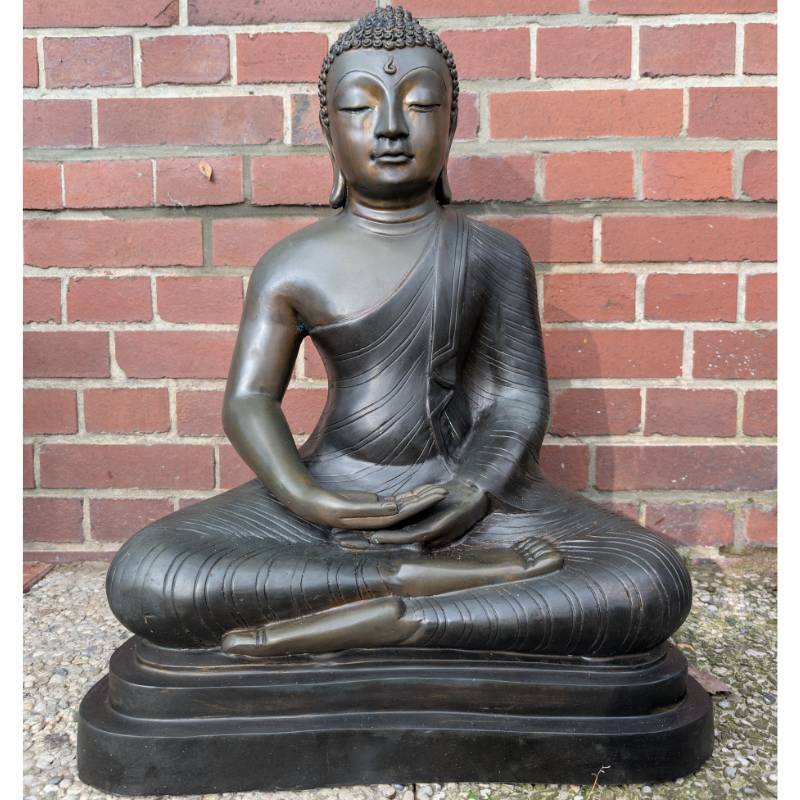
Not everyone can travel to Sri Lanka, Bhutan or Japan. Fortunately, a statue at home brings that same sense of calm within reach. A few practical points worth weighing up:
- Posture: choose deliberately between a meditating, standing or reclining depiction.
- Material: bronze, stone and wood each create a different mood and call for different care.
- Placement: give the figure a quiet, clean spot, ideally slightly raised.
- Proportion: match the size to the room so the piece can breathe.
Searching online, you will meet the same products under all sorts of labels: some people look for Buddha statues, others for Buddha figures, Buddhas or Buddha images. Don't let the terminology distract you — focus on the quality of the finish, the weight and the origin of the piece.
Conclusion
From a 5th-century rock carving in Sri Lanka to a copper colossus in Henan, Buddha statues tell the same story worldwide in endlessly different forms. They are places of devotion, remembrance and reflection, and extraordinary examples of human craftsmanship at the same time. Which of these ten Buddhas will you add to your travel list?
Contact Us
Would you like advice on the right posture, the right material or the right size for your space? The team at 1stBuddha is happy to think it through with you and help you find a piece that holds its meaning for years. Contact us for personal advice or any question about our collection.


