
Introduction
Few symbols carry as much spiritual weight as Om, also known as Aum. If you're searching for the meaning of Om, you've arrived at one of the oldest and most revered sounds in human history. This Om symbol forms the core of the Hinduism symbol meaning and has been used for thousands of years in meditation, rituals, and spiritual growth. At 1stBuddha, you'll find beautiful statues that reflect this profound symbolism, including refined depictions of Shiva, one of the most important deities within this tradition.
In this article, we take a closer look at the origin, meaning, and universal appeal of this timeless symbol.
What is the Meaning of the Ohm Symbol?
The meaning of the Ohm symbol goes far beyond a simple visual mark. Om/Aum is regarded as the primordial sound of creation, a cosmic vibration that resonates with the universe itself. The roots of this Hindu symbol lie in ancient Sanskrit scriptures such as the Upanishads and the Bhagavad Gita.
The Three States of Consciousness
Om represents three fundamental states of consciousness:
· Waking – the state of active awareness
· Dreaming – the state of the subconscious
· Deep sleep – the state of complete rest
It also symbolizes the Hindu trinity of Brahma, Vishnu, and Shiva – the creator, the preserver, and the destroyer of the universe, respectively.
The Om Symbol Explained Visually
As a Hinduism symbol, Om consists of three curves and a dot, each carrying its own meaning:
The Three Primordial Sounds
1. "A" – represents creation and the waking state
2. "U" – represents preservation and the dreaming state
3. "M" – represents dissolution and deep sleep
The Dot and the Unmanifested
Above the curves sits a dot representing the unmanifested: the source from which all creation arises and to which everything ultimately returns.
The Sanskrit Origins of Om
The Om symbol is inseparably linked to the ancient Sanskrit language, known for its precision and richness of sound. Om is believed to be the most fundamental sound from which all other sounds and languages emerged – the very embodiment of cosmic vibration.
Om/Aum in Hinduism and Buddhism
Meaning within Hinduism
As a central Hinduism symbol, Om is chanted at the beginning and end of rituals. It symbolizes the cyclical nature of existence: creation, preservation, and dissolution, eternally in motion.
Meaning within Buddhism
Om is also a powerful mantra within Buddhism. It is widely used during meditation to harmonize mind and body and guide practitioners toward enlightenment (Nirvana).
Scientific and Philosophical Perspectives
Researchers show growing interest in the acoustic properties of Om. Philosophically, it symbolizes consciousness and the interconnectedness of all beings. Neuroscientific studies even suggest that chanting Om can calm the brain and reduce stress.
Cultural Significance and Universal Appeal
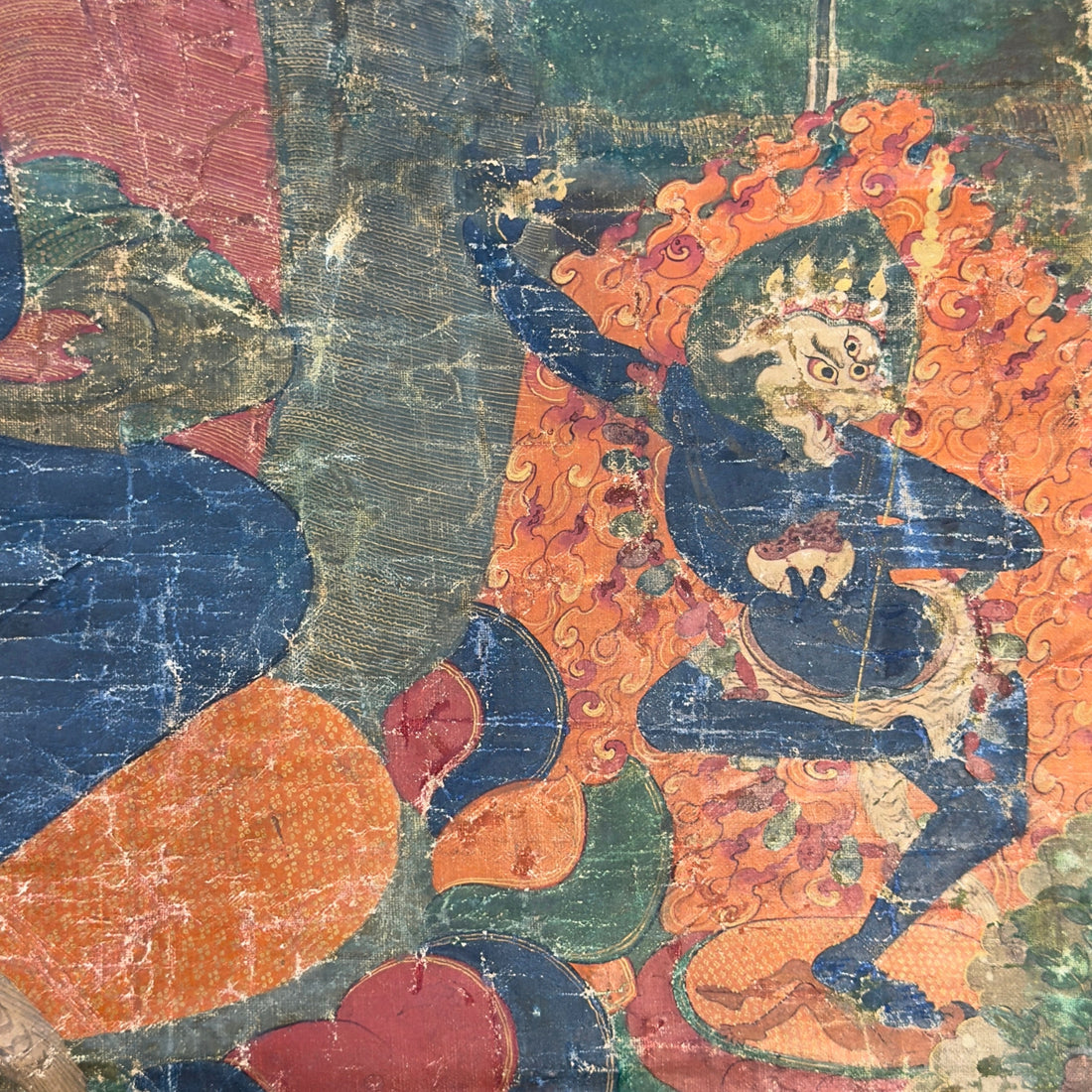
Throughout history, Om has been artistically depicted in scriptures, art, and architecture. The symbol is embraced worldwide, far beyond the borders of India, by yoga practitioners and mindfulness enthusiasts seeking inner peace and connection.
Conclusion
The meaning of Om transcends time, culture, and religion. As a timeless Hinduism symbol, Om remains a powerful expression of unity, consciousness, and the eternal pursuit of spiritual enlightenment. At 1stBuddha, you'll find exclusive statues and artworks – including beautiful depictions of Shiva – that bring this rich symbolism into your own home.
Contact us if you have any questions about our collection or would like advice on which statue best suits your spiritual journey.


