
Introduction
Few divine figures capture the imagination quite like Parvati. As the Hindu goddess of love, fertility and devotion, she is revered by millions for her goodness, her fight against evil and her ability to bestow blessings with unwavering grace. Together with Lakshmi, the goddess of prosperity, and Saraswati, the goddess of knowledge and learning, she forms the feminine trinity that embodies the foundations of human existence. As the consort of Lord Mahadev, she also stands at the very heart of the cosmic order.
In search queries she often appears as "Parvati god", but in Hinduism she is above all the divine feminine force: an Indian goddess who is at once mother, companion and primal form of energy. In this article you will discover who Parvati is, which forms she takes, and why Parvati statues still hold a central place in temples and home altars today.
Who Is Parvati? The Essence of an Indian Goddess
Parvati represents the nurturing, creative and protective aspect of the divine. Where Lakshmi stands for material abundance and Saraswati for wisdom, Parvati embodies the divine feminine energy that makes life possible and sustains it.
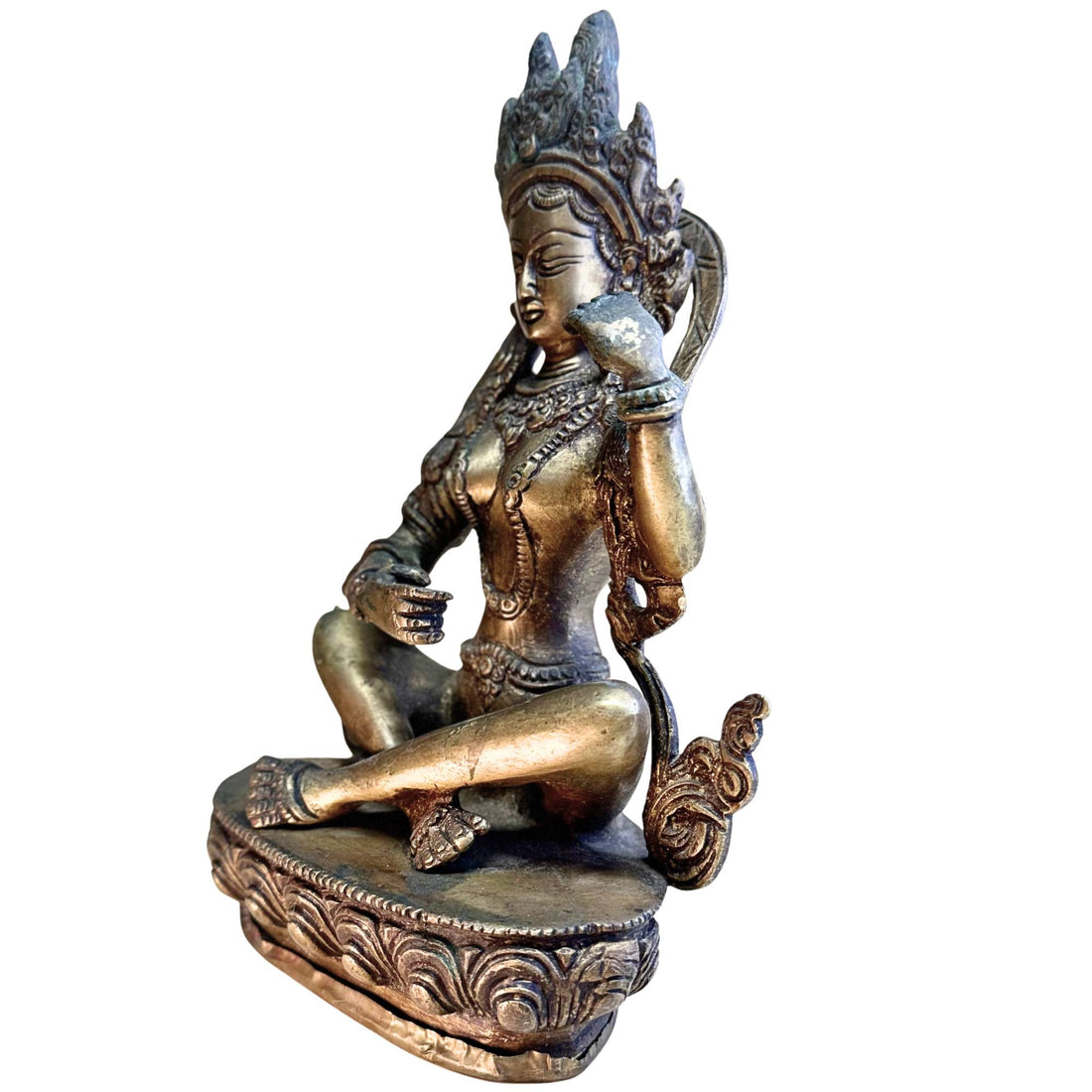
The Trinity of Goddesses
These three goddesses are not separate figures, but three faces of the same reality:
· Lakshmi – prosperity, fortune and abundance
· Saraswati – knowledge, art and spiritual insight
· Parvati – love, fertility, devotion and motherhood
Parvati God or Parvati Goddess?
The term "Parvati god" is often used, but within the Hindu tradition Parvati is emphatically a goddess: the feminine half of the divine whole. Without her, Shiva's masculine energy would remain incomplete — a thought that runs through the whole of Hindu philosophy.
Parvati as Shakti Goddess: The Energy Behind All Life
Parvati is inseparably linked to Shakti, the universal feminine energy that animates the cosmos. As Shakti goddess, she symbolises the dynamic force that carries and renews all living beings.
Where Shiva represents consciousness, Shakti is movement. Consciousness without energy remains still; energy without consciousness has no direction. Together they form the eternal creative power that ensures continuous growth and renewal.
The Cosmic Dance of Creation and Destruction
As the second consort of Lord Mahadev, Parvati's story is woven into the cosmic dance that Shiva orchestrates. That dance is not merely a symbolic act, but a fundamental force behind the cycle of birth, existence and dissolution.
Within this intricate cosmic fabric, Parvati is the stabilising, nourishing presence. She ensures that destruction always gives way to new creation.
The Ten Forms of Parvati: The Dasamahavidyas
Parvati reveals herself in ten forms, known as the Dasamahavidyas. Each form highlights a different aspect of her power and knowledge:
1. Kali – a formidable figure with dark complexion, multiple arms and a garland of skulls. She stands for the destructive aspect of the divine feminine and the conquering of evil forces.
2. Tara – compassionate and serene, often depicted in a meditative posture. She represents the protective, nurturing mother.
3. Bhuvanevari – associated with knowledge and learning; she embodies wisdom and the intellectual side of the divine feminine.
4. Sadasi – symbol of the eternal and unchanging, the timeless and unmanifested aspect of the cosmos.
5. Dhumavati – the widow goddess, depicted as an old and unattractive figure. She stands for life's difficulties and the inner strength to transcend them.
6. Bhairavi – fierce and fearless. Her name derives from 'Bhairava', meaning fear or awe; she grants courage in adversity.
7. Chinnamasta – the most striking form: a goddess who beheads herself and feeds her two attendants with her own blood. She symbolises sacrifice and self-surrender.
8. Kamala – surrounded by lotus flowers, associated with wealth, prosperity and the material aspects of life.
9. Bagala – protective and combative, holding weapons to ward off malevolent forces.
10. Matangi – the goddess of art and creative expression, of music, speech and refined culture.
Together these forms show how multifaceted Parvati is: from the gentle mother to the relentless destroyer of evil.
Shiva and Shakti: The Divine Union
The interplay of Shiva and Shakti forms the heart of Hindu spirituality. This union stands for timeless harmony and balance, and underlines that creation and existence would be incomplete without both forces.
A Concept That Evolves With Time
Thinking about Shiva and Shakti has developed and adapted over millennia. That flexibility shows the resilience of Hindu religious thought and explains why this symbolism still inspires seekers and devotees.
Parvati as Mother: Ganesha and Kartikeya
Motherhood is a core aspect of Parvati's divine nature. The stories of her sons have been passed down for generations:
· Ganesha, the elephant-headed deity, is revered as the remover of obstacles.
· Kartikeya (Skanda), the god of war, stands for courage and valour.
Parvati's love and guidance shape the destinies of both sons and reflect her role as universal mother.
Parvati Statues and Their Spiritual Meaning
A Parvati statue is more than a work of art: it is an embodiment of divine motherhood and cosmic balance. These figures are crafted from a range of materials — bronze, marble, stone and wood — each carrying its own character and significance.
Five Well-Known Depictions
1. Uma Parvati Mother Goddess Statue – Parvati as loving mother, often cradling Ganesha and Kartikeya in her arms.
2. Two-Armed Consort Parvati – Parvati as Shiva's devoted companion, depicted with two arms, emphasising their deep bond.
3. Four-Armed Lalita with Ganesha and Skanda – Lalita, another name for Parvati, holds various attributes in her four arms and displays her maternal role.
4. Uma Maheshvara – Parvati beside Lord Mahadev, a symbol of their eternal bond as a divine couple.
5. Ardhanarishvara – half Shiva, half Parvati in a single figure: the most direct depiction of the inseparable unity of Shiva and Shakti.
Where These Statues Find Their Place
In Hindu temples these depictions serve as a focal point for worship. At home too, on an altar or in a meditation space, a statue helps to focus the attention. At 1stBuddha you will find rare, handcrafted pieces in which traditional craftsmanship and spiritual symbolism come together.
Historical Background and Worship
The worship of Parvati dates back to antiquity, with references in sacred texts such as the Puranas. Her development — from daughter of the mountain king Parvat and Queen Mena to mother of the gods — shows how her significance grew over the centuries within Hindu mythology and Indian culture.
How Devotees Honour Her
· Fasting on special days, such as during Navratri
· Reciting hymns and mantras
· Offering flowers, incense and sweets
· Daily meditation and prayer before her altar
Frequently Asked Questions
What is Parvati worshipped for? For protection, blessings and guidance, and for her strength in the battle against evil.
Why is Parvati worshipped alongside Shiva? Because their union symbolises the balance between masculine and feminine energy — a core idea in Hindu spirituality.
Can non-Hindus worship Parvati? Yes. Her blessings are sought by people from all kinds of backgrounds, which makes her an especially inclusive deity.
Conclusion
Parvati is the unifying force in the Hindu worldview: mother, companion, protector and primal source of energy all at once. Anyone who explores her story discovers a goddess who encompasses the full spectrum of life — from tender care to unyielding strength. Bringing a statue into your home is therefore not only an aesthetic choice, but also a way of keeping that symbolism close every day.
Contact us
Looking for an authentic Parvati statue, or undecided between bronze, marble and stone? The team at 1stBuddha is happy to advise you on form, material and placement. Contact us for personal guidance or to explore the available collection.


