
Anyone who delves into Buddhism inevitably comes across the name Borobudur. The Borobudur temple is regarded worldwide as one of the most impressive Buddhist structures and forms an essential part of Buddhist cultural heritage. At 1stBuddha, we explore the rich history of Borobudur in this article and discover where the Borobudur temple is located. We'll also look at how this remarkable Buddhist structure, the Borobudur, came to be and what secrets it still holds today.
Where Is the Borobudur Temple Located?
Indonesia is known worldwide as a country with countless precious Buddhist artifacts and temples. Among the countless temples across the country, Borobudur is by far the most famous. This massive temple is located in Central Java and dates back to the 8th and 9th centuries.
Indonesia and Borobudur are inseparably linked: the temple is considered the region of origin of Mahayana Buddhism in Magelang, Central Java.
The Architecture of the Borobudur Temple
This extraordinary structure was built in three layers:
· First layer – a pyramidal base with five concentric square terraces
· Second layer – the trunk of a cone shape with three circular platforms
· Third layer – a stupa on top, crowning the entire structure
The artistic depiction of Buddhist values and stories in the grandeur and complexity of the Borobudur temple captivates every visitor, as its architecture closely follows the traditions of ancient times.
History of Borobudur: The Story of a Masterpiece
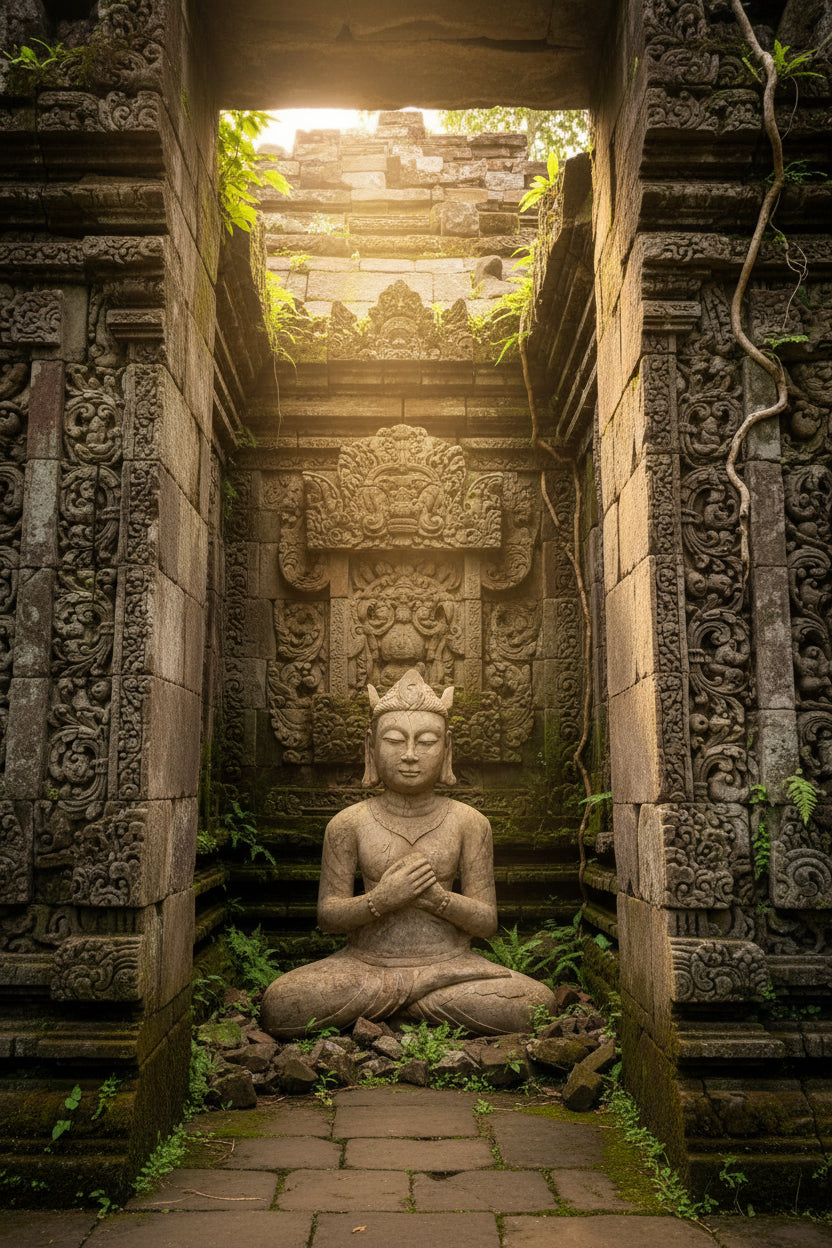
The temple was restored in the 1970s with the help of UNESCO, after having lain buried under volcanic ash for centuries. It was not rediscovered until 1815.
Some notable facts about this Buddhist structure, the Borobudur:
· The temple covers an impressive area of 2,500 square meters
· The walls and balustrades are richly decorated with fine bas-reliefs
· Around the circular monument are approximately 72 open stupas
· The temple was built without the use of cement or mortar — a remarkable feat for its time
Buddhism and Hinduism Side by Side
The Borobudur temple complex is regarded as the sacred representation of Lord Buddha. Yet the monument was built during a period when Indian pilgrims were spreading both Buddhist and Hindu teachings throughout Asia. The great dynasties of Central Java built numerous religiously significant structures during this era. Remarkably, Buddhism and Hinduism appear to have coexisted peacefully in this region.
The True Origin: A Historical Mystery
No conclusive evidence exists for the exact reason behind the construction of Borobudur. Its founding date is estimated based on an inscription engraved on the temple's hidden foot.
This raises a lasting question: was the temple built during the dominant period of Buddhism, or during that of Hinduism? Although the Sailendra dynasty is generally regarded as devout followers of Buddhism, the engraved texts suggest they may have been Hindu. Borobudur was, in fact, built during the same period as the Hindu temple Prambanan.
During this era, numerous globally recognized Buddhist and Hindu monuments were built throughout Indonesia. The mountains of the Kedu Plain are still considered sacred ground today, home to several pilgrimage sites.
The Rediscovery of the Borobudur Temple
For a long time, the temple lay hidden beneath a thick layer of volcanic ash and dense forest. Its existence remained a mystery until British rule over Indonesia.
The Role of Thomas Stamford Raffles
When the British appointed Lieutenant Thomas Stamford Raffles, he showed great interest in the history of Java. During an inspection, he was told about an impressive monument deep in the jungle. He subsequently appointed an engineer to investigate the rumors.
Under Raffles' supervision, 200 men were ordered to clear the dense vegetation and dig deep. In doing so, they eventually uncovered the hidden treasure: the Borobudur temple in Central Java, believed to have been built during the reign of the Sailendra dynasty.
What Makes the Temple So Special
The temple consists of six square levels, crowned with three circular platforms, and is adorned with:
· 2,672 relief panels
· 504 Buddha statues
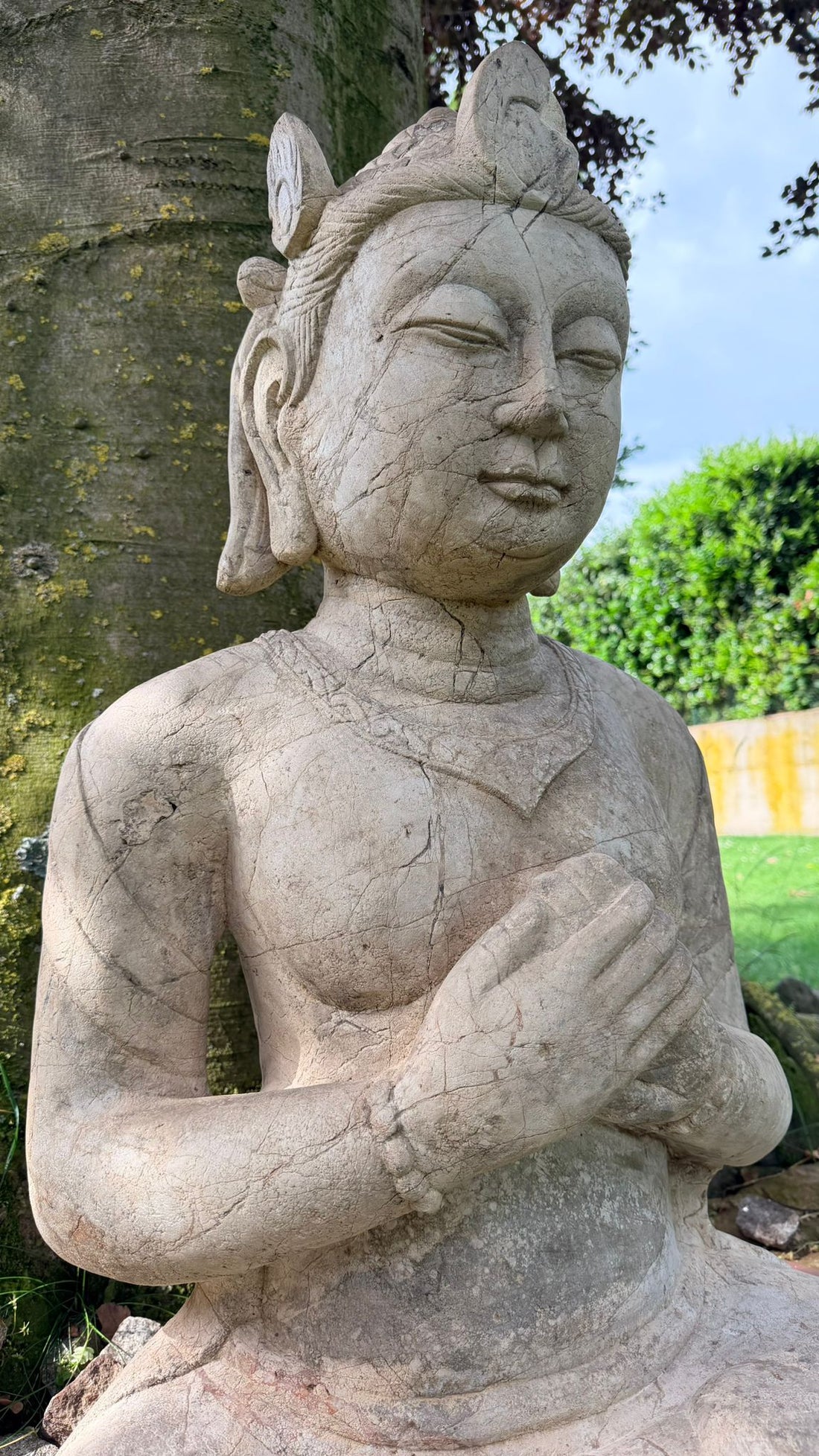
At the center of the upper platform sits a central dome, surrounded by 72 seated Buddha statues placed around the perimeter of the central stupa.
The native culture of Indonesia built this temple to spread the concept of Buddhist salvation. Some even regard Borobudur as the giant textbook of Buddhism, its bas-reliefs depicting the entire life of Buddha and the principles of enlightenment he taught.
Conclusion
The Borobudur temple is far more than an ancient structure: it is a living testament to centuries-old spirituality, art, and history. From its mysterious origins to its remarkable rediscovery by Raffles, every chapter of the history of Borobudur adds to the fascination this monument continues to inspire today.
Anyone interested in Indonesia and Borobudur and the rich Buddhist history of the region will find in this structure a unique combination of architecture, religion, and narrative art found nowhere else in the world.
Want to learn more about Buddhist art, temples, and statues that reflect this rich tradition? Explore the collection at 1stBuddha and let yourself be inspired by centuries of wisdom. Contact us for personalized advice on Buddhist artworks that suit your home or spiritual journey.


